Who Can Benefit
- Broad group: Health-conscious adults seeking to add flavorful, anti-inflammatory foods to everyday meals.
- Medium group: People dealing with chronic inflammation, mild inflammatory symptoms, or stress who want gentle, plant-based dietary support.
- Narrow, symptom-based group: Individuals exploring dietary strategies that may support gastric health or cancer therapy contexts, including those undergoing cancer treatment or seeking adjunctive approaches alongside radiotherapy.
What Research Shows
8-shogaol, a ginger compound, may help enhance the effects of radiotherapy against gastric cancer in preclinical models. Inflammation experiments showed that 8-shogaol reduced multiple inflammatory signals (COX-2, TNF-α, IL-6, and IL-1β) in mice and cell studies. In gastric cancer cells (AGS and NCI‑N87), it lowered cell viability and increased signs of cell death, including caspase-3 activity and LDH release; blocking caspases reduced this death, indicating a caspase-dependent process. Mechanistically, 8-shogaol raised intracellular ROS and calcium, triggered ER stress through the PERK‑CHOP pathway, and its pro-death effects were enhanced when combined with ER stress inducers. In radioresistant gastric cancer models, combining 8-shogaol with radiation altered EMT-related markers—upregulating N-cadherin and vimentin while downregulating E-cadherin—suggesting a potential to help overcome resistance. Taken together, the findings point to 8-shogaol as a potential adjunct to radiotherapy for gastric cancer, supported by multiple models from cells to animals.
How to Eat It
- Recommended Serving
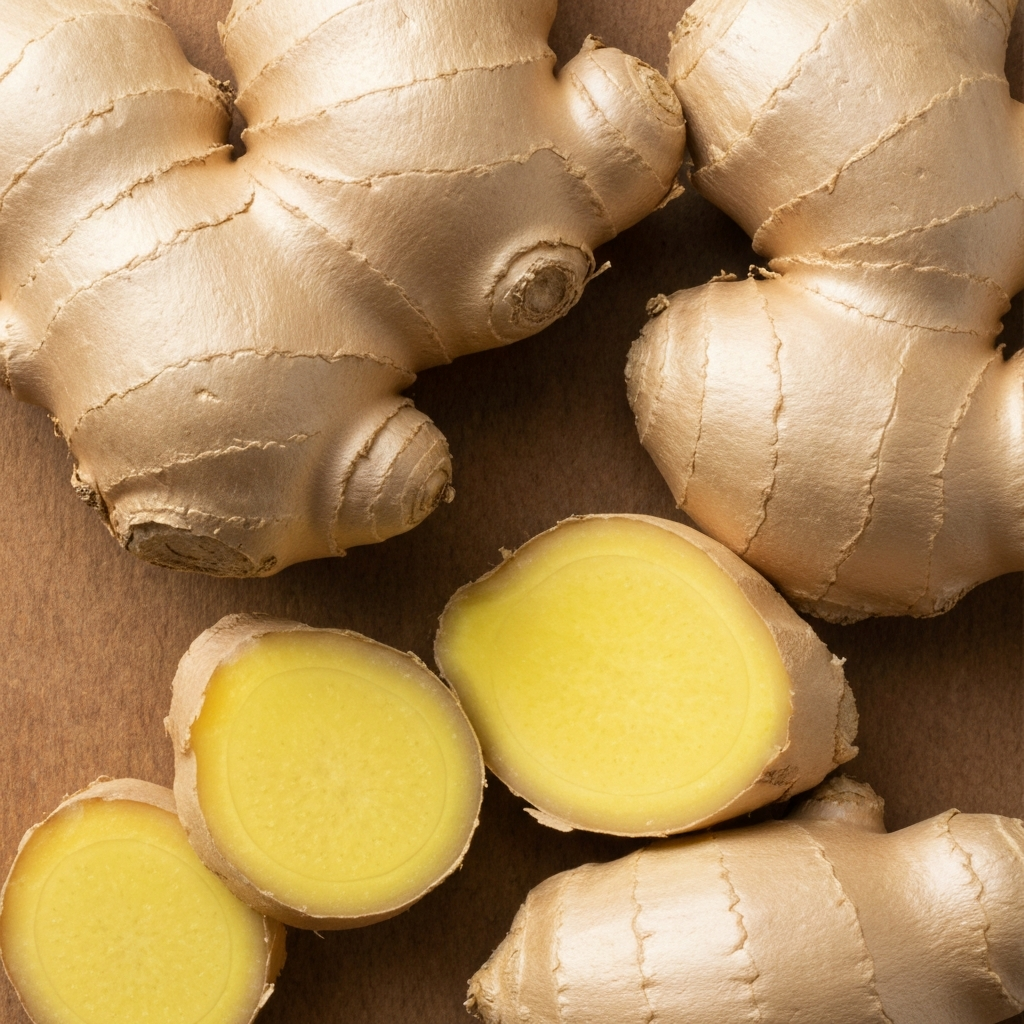
- Include ginger regularly in your daily routine. A practical target is about 1–2 teaspoons of freshly grated ginger per day, or roughly 1 inch of fresh ginger root daily, incorporated into meals, beverages, or snacks.
- Easy Ways to Eat
- Stir grated ginger into tea, smoothies, soups, or stir-fries.
- Add a small amount to salad dressings, marinades, or yogurt-based sauces.
- Sprinkle dried ginger onto overnight oats, yogurt bowls, or roasted vegetables for a warm, aromatic kick.
- Flavor Pairings
- Pairs nicely with citrus (lemon, lime), garlic, chili, sesame, and soy sauce.
- Great in seafood dishes, light curries, vegetable stir-fries, and roasted root vegetables.
- Works well with honey or maple for a soothing tea or glaze.
Takeaway
A little ginger added regularly to meals may offer anti-inflammatory benefits and, in lab models, could support cancer therapy approaches. Start by weaving 1–2 teaspoons of fresh ginger into daily meals or drinks this week, and explore simple recipes that pair it with bright citrus or savory dishes. If you’re navigating cancer treatment, talk with your healthcare team before making any changes to your diet. Small, consistent dietary tweaks can add up to meaningful daily wellness.