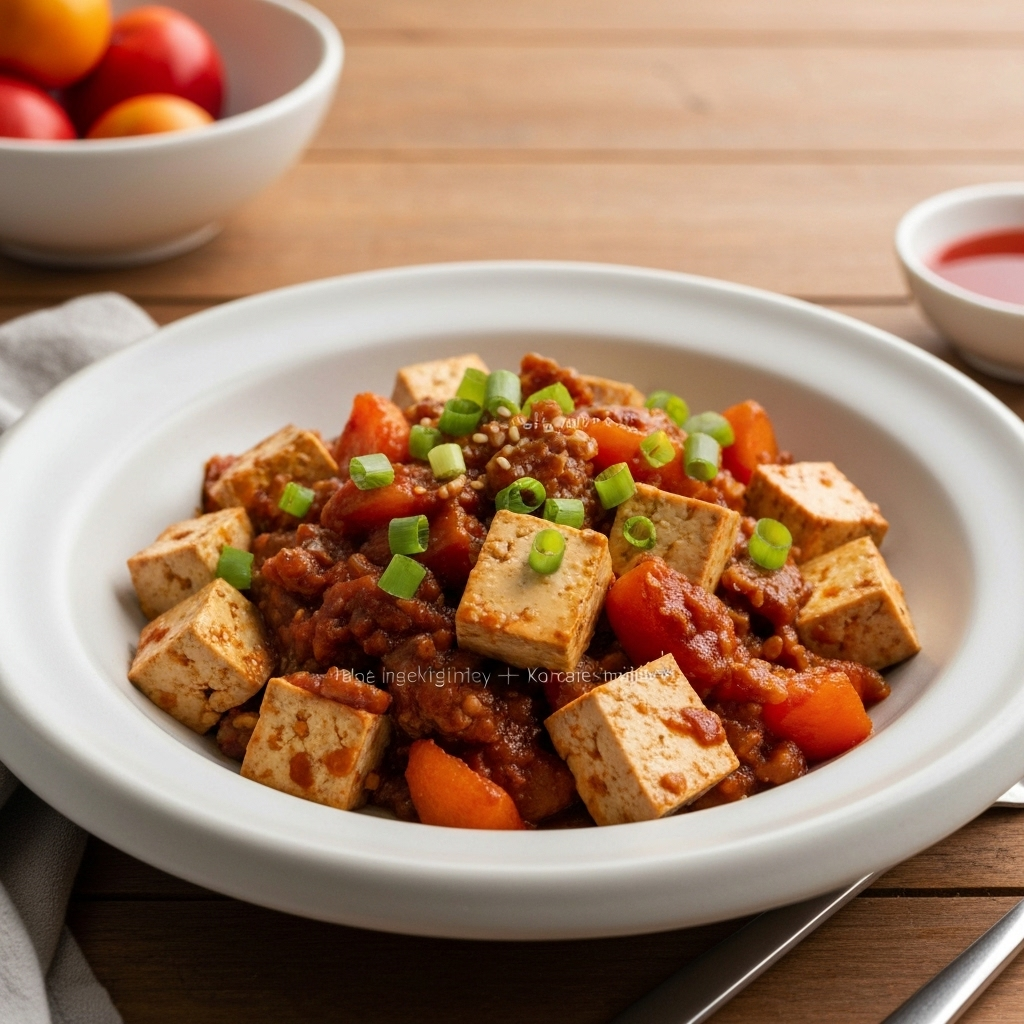
A bright, flexible stir-fry that plays peach against spicy gochujang and silky tofu, all from a well-stocked pantry.
Recipe Summary Card
| Prep Time | Cook Time | Total Time | Servings |
|---|---|---|---|
| 15 min | 12 min | 27 min | 4 servings |
Intro
This gochujang peach tofu stir-fry is built for weeknights: vibrant, quick to throw together, and pantry-friendly. Tangy-sweet peaches mingle with a spicy-sweet sauce while tofu delivers protein and substance. It’s a balanced, glossy skillet meal that comes together in under a half hour.
The Best Tofu for This Recipe
Extra-Firm vs Firm
- Extra-firm tofu holds its shape for crisp edges in a quick sear; great for a sturdy bite. Firm tofu presses easily yet can be slightly softer after cooking. Choose extra-firm when you want stronger texture and minimal crumbling.
Water-Packed vs Oil-Packed
- Water-packed tofu drains well and browns cleanly; oil-packed offers richer mouthfeel but requires more draining. Opt for water-packed for a cleaner, crisper result; oil-packed if you crave extra richness.
Cubed vs Sliced
- Cubed tofu soaks up sauce evenly and cooks quickly in stir-fries. Sliced tofu can present larger bites and edges that sear beautifully. Pick based on how you want the tofu to interact with the sauce.
Other Ingredients (and Helpful Swaps)
- Tomatoes: Role is to add acidity and sweetness in many pan sauces; swap tip — a tablespoon of tomato paste can deepen color and tang, but peaches keep this version bright.
- Onion: Adds aromatics and sweetness; swap tip — shallots for a milder bite.
- Garlic: Aromatic backbone; swap tip — 1/2 teaspoon garlic powder if you’re short on fresh cloves.
- Red Pepper: Adds color and a gentle heat note; swap tip — use a yellow or orange bell pepper for sweeter texture.
- Pasta (Noodles): Provides body to the dish; swap tip — soba, rice noodles, or spaghetti work; adjust cook time to match the noodle type.
- Herbs: Finishing touch for brightness; swap tip — cilantro or green onions can replace or pair with sesame greens.
Ingredients
Sauce
- Peach, diced: 2 cups (300 g) peaches; ripe and sweet
- Gochujang: 2 tablespoons (30 ml)
- Soy sauce: 2 tablespoons (30 ml)
- Rice vinegar: 1 tablespoon (15 ml)
- Brown sugar: 1 teaspoon (4 g)
- Garlic, minced: 3 cloves (9 g)
- Ginger, grated (optional): 1 teaspoon (5 g)
- Water: 2–3 tablespoons (30–45 ml)
- Kosher salt: 3/4 teaspoon (4.5 g); season to taste
Pasta
- Extra-firm tofu, pressed and cubed: 14 oz (400 g)
- Noodles (pasta): 8 oz (225 g) dried noodles (rice noodles, soba, or spaghetti)
Finish
- Sesame oil: 1 teaspoon (5 ml)
- Sesame seeds: 1 tablespoon (8 g)
- Green onions, sliced: 2 stalks (30 g)
Directions
- Prep tofu and peaches (10–15 min) — Press tofu to remove excess moisture, then cut into 3/4-inch (2 cm) cubes. Dice peaches into bite-sized pieces and mince garlic; set aside.
- Cook noodles to al dente (4–5 min) — Bring a pot of salted water to a boil. Add noodles and cook until just tender. Drain and rinse with warm water; set aside.
- Sear tofu until edges are golden (4–5 min) — Heat 1 tablespoon oil in a large skillet over medium-high. Add tofu cubes and sear until edges look glossy and crisp, about 4 minutes per side. Transfer to a plate.
- Make sauce and aromatics (2–3 min) — In the same pan, add a touch more oil if needed. Sauté garlic (and ginger, if using) until fragrant, about 30 seconds. Stir in peach, gochujang, soy, rice vinegar, brown sugar, and water. Bring to a gentle simmer; cook 2–3 minutes until peaches are tender and sauce is glossy.
- Toss with sauce and noodles (1–2 min) — Return tofu to the pan along with the cooked noodles. Toss to coat evenly and heat through, about 1–2 minutes. The edges of peaches should look glossy and sauce should cling to noodles.
- Finish and serve (0.5 min) — Drizzle with sesame oil, sprinkle sesame seeds, and scatter green onions. Give one final toss and serve hot.
How to Store Leftovers
Refrigerate leftovers in an airtight container within 2 hours of cooking. Store up to 3 days. Reheat on the stovetop over medium heat, stirring to loosen sauce; or microwave in 1–2 minute bursts, stirring between sessions. If reheating, add a splash of water to refresh the sauce.
What to Serve With Gochujang Peach Tofu Stir-Fry
- Steamed jasmine or brown rice makes a satisfying base; 1 cup cooked per serving is a good start.
- Cucumber sesame salad provides crisp contrast and brightness; mix sliced cucumbers with rice vinegar, a touch of sugar, and sesame seeds.
- Lightly sautéed greens (bok choy or spinach) add color and nutrition; a quick splash of soy after wilting is nice.
- A simple kale or arugula salad with a sesame-ginger dressing adds a fresh finish.
Variations & Tips
- Spicier: Increase gochujang to 3 tablespoons or add a pinch of red pepper flakes.
- Creamier: Whisk 1 teaspoon peanut butter into the sauce for a subtle nutty depth.
- Gluten-free: Use tamari or coconut aminos in place of soy sauce.
- Canned-swap: Use drained canned peaches in a pinch for a jammy, concentrated sweetness.
- Herbs: Finish with cilantro or green onions for a fresher top note.
Enjoy Your “Gochujang Peach Tofu Stir-Fry”
Enjoy the bright, glossy balance of peach sweetness and chili heat in every bite. This dish brings a comforting, flavorful finish to busy weeknights, and the pantry-friendly setup makes it easy to repeat and adapt. Enjoy your Gochujang Peach Tofu Stir-Fry tonight.