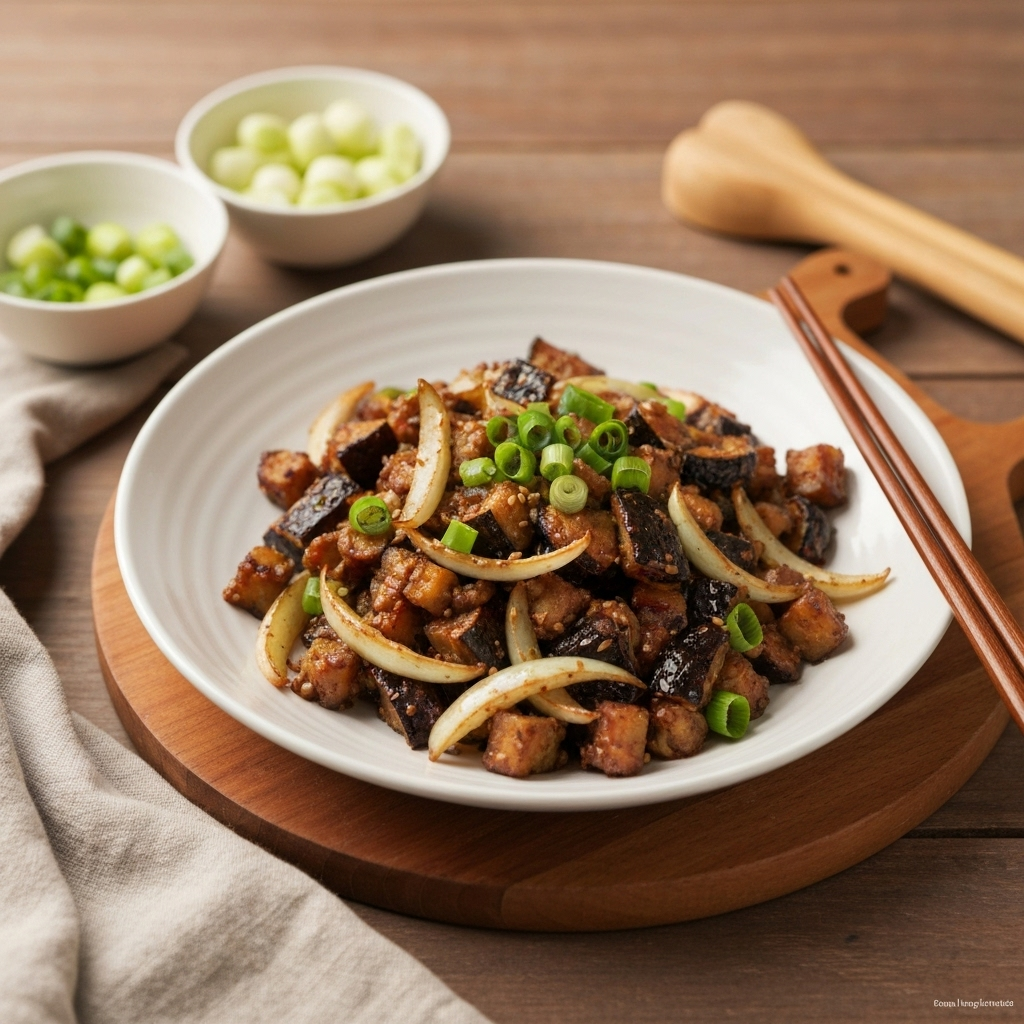
Silky eggplant, a bright ginger-sesame glaze, and a glossy finish come together in under 30 minutes.
| Prep Time | Cook Time | Total Time | Servings |
|---|---|---|---|
| 15 mins | 10 mins | 25 mins | 4 servings |
Intro
This dish is a pantry-friendly staple you can pull together in a flash. Eggplant softens to a creamy texture while soaking up a punchy sesame-ginger sauce. It’s the kind of weeknight supper that tastes both comforting and bright, with little cleanup.
The Best Core Ingredient for This Recipe
The Best Eggplant for This Recipe
Globe vs Japanese
- Globe eggplants are larger and soak up flavors well; they hold shape with a bit of bite. Pros: easy to portion, great for bigger crowds. Cons: can be spongier if not salted. When to choose: for a heartier texture and more sauce absorption.
White vs Purple
- White varieties are often creamier and less bitter; purple are the classic, glossy-skinned option. Pros: creamy flesh, vibrant color. Cons: slightly quicker to overcook if not watched. When to choose: if you want a silkier bite.
Salted vs Unsalted
- Salting draws out moisture and reduces sponginess. Pros: crisper exterior, less soggy result. Cons: adds a brief rest step. When to choose: if your eggplant seems very wet, salt and rest 10 minutes before cooking.
Other Ingredients (and Helpful Swaps)
- Eggplant: Sweat and pat dry before cooking to reduce moisture; swap tip — if you don’t have time to sweat, slice eggplant thinner and pat dry thoroughly.
- Fresh ginger: Delivers bright warmth; swap tip — if you’re out, use 1/2 teaspoon ground ginger plus a splash of rice vinegar to wake the sauce.
- Garlic: Adds sharp brightness; swap tip — substitute 1/2 teaspoon garlic powder per clove, but add toward the end to keep aroma vibrant.
- Red pepper (bell pepper or chili): Adds color and snap; swap tip — substitute a small carrot for a sweeter bite or add a pinch of chili flakes for heat.
- Sauce base (soy sauce + rice vinegar): Creates the savory-sour balance; swap tip — tamari or coconut aminos for gluten-free; a splash of lime juice can brighten further.
- Herbs (green onions, sesame seeds): Finishers for fresh aroma and texture; swap tip — chopped cilantro or basil can lift the dish differently.
Ingredients
- Eggplant, 2 medium (about 1.5 lb / 680 g)
- Neutral oil (for stir-frying), 2 tablespoons (30 ml)
- Fresh ginger, grated, 1 tablespoon (8 g)
- Garlic, minced, 3 cloves (9 g)
- Red bell pepper, 1 medium (about 170 g)
- Soy sauce, 3 tablespoons (45 ml)
- Rice vinegar, 1 tablespoon (15 ml)
- Honey or maple syrup, 1 teaspoon (5 ml) (optional for balance)
- Water, 1/4 cup (60 ml)
- Cornstarch, 1 teaspoon (3 g) plus 1 tablespoon water for slurry (optional)
- Sesame oil, 1 teaspoon (5 ml)
- Sesame seeds, 1 tablespoon (10 g)
- Green onions, 3 stalks, sliced (optional)
Directions
-
Prepare and sweat the eggplant: Slice the eggplant into 1-inch pieces. Lightly salt with 3/4 teaspoon kosher salt, then rest 10 minutes, then pat dry. This helps the pieces brown evenly and stay tender inside.
-
Sear eggplant until edges are glossy: Heat 2 tablespoons oil in a large skillet or wok over medium-high. Add the eggplant in a single layer and cook until edges look glossy and brown, about 6–8 minutes, turning once.
-
Add garlic and ginger: Push eggplant to the sides, add the minced garlic and grated ginger in the center. Sauté until fragrant, 1–2 minutes, keeping the mixture aromatic but not scorched.
-
Stir in peppers and sauce: Add the chopped red pepper; cook another 2–3 minutes until crisp-tender. Pour in the soy sauce, rice vinegar, and optional honey; stir to coat and bring to a gentle simmer.
-
Thicken the sauce: If using the cornstarch slurry, whisk it in now and simmer 1 minute until the sauce coats the eggplant and looks glossy. If not using slurry, simmer another 1–2 minutes to reduce slightly.
-
Finish and serve: Remove from heat. Stir in sesame oil, then scatter green onions and sesame seeds over the top. Serve hot over rice or another grain to soak up every glossy kiss of sauce.
How to Store Leftovers
Refrigerate within 2 hours of cooking. Store in an airtight container for up to 3 days. Reheat in a skillet over medium heat for 3–4 minutes or in the microwave in 1–2 minute bursts, stirring between heating intervals, until hot. Freeze the sauce only if desired.
What to Serve With Ginger Sesame Eggplant Stir-Fry
- Steamed jasmine rice (or brown rice) to soak up the sauce.
- A light cucumber sesame salad to add crunch and brightness.
- Steamed bok choy or broccoli for a simple, flavorful green side.
Variations & Tips
- Spicy boost: add 1/4 teaspoon red pepper flakes or a drizzle of chili oil for a fire-kissed finish.
- Creamier version: whisk in 1 teaspoon peanut butter or tahini to the sauce for a silky texture.
- Gluten-free option: swap soy sauce for tamari or coconut aminos.
- Canned pantry swap: if you don’t have fresh ginger, use 1/4 teaspoon ground ginger and a splash of rice vinegar to mimic brightness.
- Fresh-herb lift: finish with chopped cilantro or Thai basil for a different aroma profile.
Enjoy Your Ginger Sesame Eggplant Stir-Fry
This dish invites you to savor the moment: glossy eggplant, a zippy ginger-sesame glaze, and a finishing kiss of sesame. Enjoy the Ginger Sesame Eggplant Stir-Fry as a warm, satisfying centerpiece that proves weeknights can be deliciously simple.