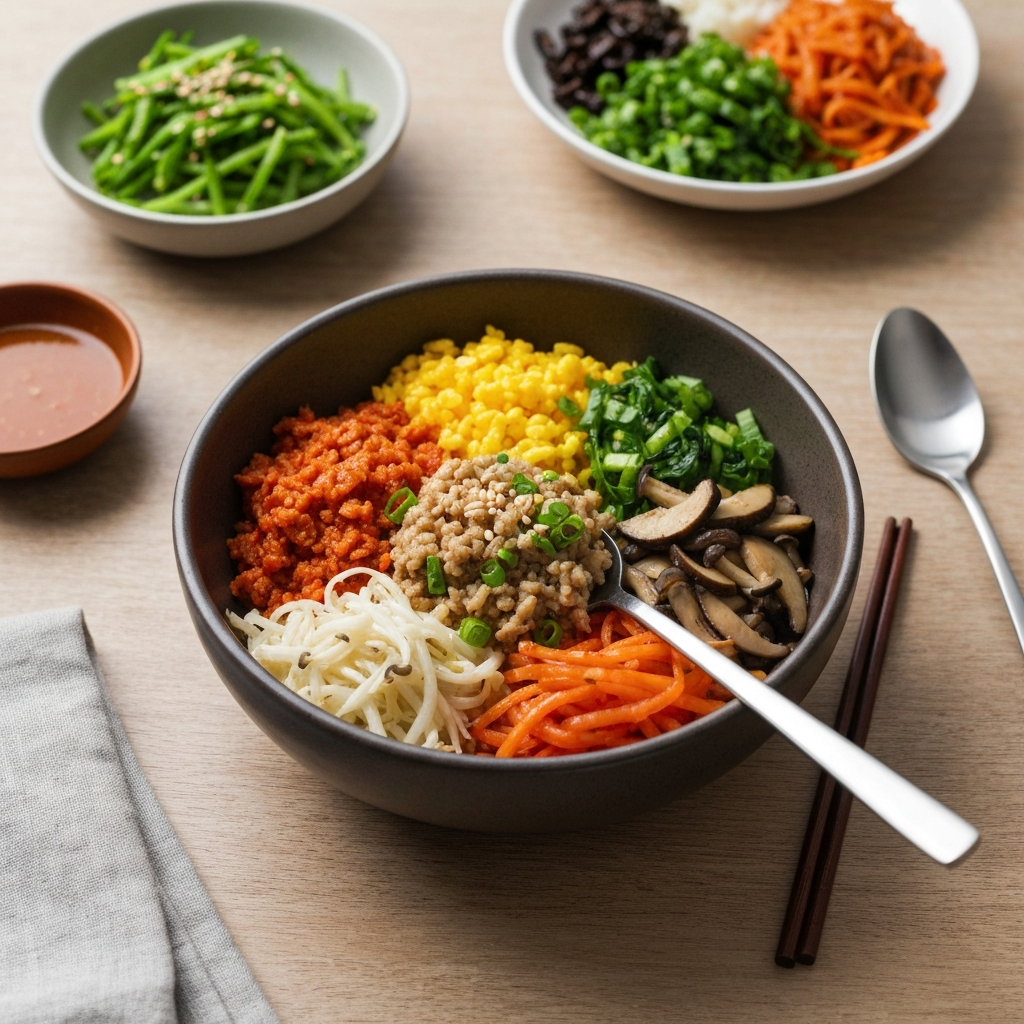
A cozy, pantry-friendly bowl of mushrooms, sesame, and a bright gochujang glaze.
| Prep Time | Cook Time | Total Time | Servings |
|---|---|---|---|
| 10 min | 20 min | 30 min | 2 |
Intro
This Herbed Mushroom Bibimbap Bowl comes together with everyday pantry staples and a quick gochujang kiss. It’s ideal for weeknights when you want something flavorful without a long ingredients list. The spoonfuls of mushrooms, sesame, and herbs keep the bowl feeling bright and restaurant-fresh.
The dish leans into pantry-friendly flavors: warm mushrooms, a glossy sesame-gochujang sauce, and fluffy rice. It’s easy to customize with what’s on hand while keeping the texture light, yet satisfying.
The Best Mushrooms for This Recipe
White Button vs Cremini
- Pros: Mild flavor, quick to cook, affordable.
- Cons: Lacks depth if used alone.
- When to choose: Use for everyday bowls when you want a neutral base that still tastes like a rich mushroom.
Shiitake
- Pros: Earthy, meaty bite, great texture holds up in a quick sauté.
- Cons: Stronger flavor can dominate if used heavily.
- When to choose: Add for deeper umami and a sturdier texture in the bowl.
Portobello
- Pros: Substantial, chewy texture that stands up to bold sauces.
- Cons: Larger slices can overwhelm the dish if not sliced thin.
- When to choose: Use when you want a heartier, almost-meaty version of bibimbap.
Other Ingredients (and Helpful Swaps)
- Tomatoes: Brighten bowls with a touch of acidity if you’re serving them. Swap: roasted cherry tomatoes for a richer sweetness.
- Onion: Aromatic base with gentle sweetness. Swap: shallots or green onions for a milder bite.
- Garlic: Central flavor layer that perfumes the sauce. Swap: garlic paste or roasted garlic for a mellower depth.
- Red Pepper: Visual color and gentle heat. Swap: bell pepper or a pinch of chili flakes for more kick.
- Pasta: Not part of the traditional bibimbap, but if you want a noodle version, swap in soba or rice noodles and adjust timing.
- Herbs: Fresh cilantro or chives brighten the finish. Swap: parsley or dill if you prefer a milder herb note.
Ingredients
-
Sauce:
- Gochujang — 1 tablespoon (15 ml)
- Soy sauce (or tamari, gluten-free) — 1 tablespoon (15 ml)
- Rice vinegar — 1 teaspoon (5 ml)
- Sugar — 1 teaspoon (4 g)
- Sesame oil — 1 teaspoon (5 ml)
- Water — 1–2 tablespoons (15–30 ml) to thin
-
Base:
- Cooked white short-grain rice — 2 cups (360 g)
-
Mushrooms:
- Cremini or white button mushrooms — 8 oz (225 g), sliced
- Neutral oil — 1 tablespoon (15 ml)
- Sesame oil — 1 teaspoon (5 ml)
-
Finish:
- Eggs (optional) — 2 large
- Sesame seeds — 1 tablespoon (10 g)
- Scallions — 2, thinly sliced
- Fresh herbs (cilantro or chives) — optional
Directions
-
Cook Rice — Rinse 1 cup (180 g) white short-grain rice. Combine with 2 cups (480 ml) water; bring to a gentle simmer, cover, and cook 15–18 minutes. Remove from heat and let stand 5 minutes, then fluff.
-
Sauté Mushrooms — In a skillet over medium-high heat, add 1 tablespoon oil. Add mushrooms with 3/4 teaspoon kosher salt; sauté 5–6 minutes until edges look glossy and browned. Remove from pan and stir in 1 teaspoon sesame oil.
-
Make Sauce — Whisk together 1 tablespoon gochujang, 1 tablespoon soy sauce, 1 teaspoon rice vinegar, 1 teaspoon sugar, and 1 teaspoon sesame oil. Thin with 1–2 tablespoons water to desired drizzling consistency.
-
Fry Eggs (Optional) — In the same skillet, add a touch more oil if needed. Crack in eggs and cook 2–3 minutes for runny yolk or 3–4 minutes for set yolk.
-
Assemble Bowls — Divide warm rice between two bowls. Top with mushrooms, drizzle with the gochujang sauce, and add eggs if using. Finish with sesame seeds, scallions, and fresh herbs.
How to Store Leftovers
- Refrigerate leftovers within 2 hours in airtight containers. Store for up to 3 days.
- Keep components (rice, mushrooms, and sauce) separate for best texture; reheat together when possible.
- Reheating: microwave 1–2 minutes, covered; stir, and add a splash of water if the rice looks dry.
- Cold/room temp: If you won’t reheat, the bowl can be enjoyed cold as a quick, pantry-friendly option.
- Sauce can be frozen for longer storage.
What to Serve With Herbed Mushroom Bibimbap Bowl
- Cucumber sesame salad: Crisp cucumbers with rice vinegar and sesame, a bright counterpoint to the bowl.
- Kimchi: A tangy, fermented side that adds extra zing and crunch.
- Quick pickled radish and carrot: A crisp, zippy bite that elevates the texture contrast.
Variations & Tips
- Spicy upgrade: Add extra gochujang or a pinch of chili flakes to the sauce for more heat.
- Creamier version: Stir in 1 teaspoon of tahini or peanut butter into the sauce for a richer mouthfeel.
- Gluten-free: Use tamari in place of soy sauce.
- Canned/mushroom swap: If using canned mushrooms, reduce or skip the sauté time and adjust salt to taste. Dried mushrooms: rehydrate in hot water, then sauté until tender.
- Herb play: Swap cilantro for chives or dill to shift aroma and brightness.
Enjoy Your Herbed Mushroom Bibimbap Bowl
Relish the warm, glossy mushrooms, the gentle snap of fresh herbs, and the playful kick of gochujang in this pantry-friendly bowl. Enjoy your Herbed Mushroom Bibimbap Bowl as a comforting, weeknight-worthy meal that comes together quickly and rewards you with vibrant flavors.